

Bathroom tile mold can come back fast, sometimes even when a washroom looks clean on the surface. The problem usually sits in grout lines, corners, silicone joints, and damp areas that stay wet after showers. For homes, hotels, hospitals, offices, and rental properties in Kenya, prevention matters more than repeated scrubbing. Using the right professional washroom cleaners helps remove soap scum, body oils, and residue that feed mold, while a better ventilation and drying routine keeps moisture under control. If you source cleaning and maintenance products locally, Thika Wax Works is one of the Kenyan suppliers serving hospitality, facility care, and maintenance needs across East Africa.
Why bathroom tile mold keeps returning even after you clean
Mold prevention starts with understanding the surface. Tiles are hard-wearing coverings made from materials such as ceramic, stone, glass, metal, or baked clay, typically fixed in place in rows or patterns, as summarized from Wikipedia's entry on tile. The tile face is often easier to clean than the grout, sealant, or edges around it, and that's where repeat growth usually starts.
A bathroom can look shiny but still hold the exact mix mold likes: moisture, warmth, poor airflow, and residue. Competitor content often stops at "spray and wipe." The bigger issue is that soap film and skin oils create a layer on tile and grout, so moisture stays longer and cleaning becomes less effective over time.
Key takeaway: If you only clean visible stains, you're treating the symptom. If you remove residue and reduce dampness, you're preventing regrowth.
In Kenyan settings, the risk rises in bathrooms with limited windows, weak extractor fans, shared use, or rushed housekeeping schedules. That's common in city apartments, guest houses, schools, hospitals, and office washrooms where fast turnover leaves surfaces wet for hours.
You can see the same prevention logic in other maintenance areas too. For example, stopping moisture damage in buildings depends on barrier protection and routine care, which is covered in this guide to waterproofing compounds for concrete.
The hidden trouble spots mold targets first
The first signs often appear in places cleaners miss during quick daily routines:
- Grout lines between wall tiles
- Silicone around bathtubs, sinks, and shower trays
- Corners behind toilet cisterns
- Undersides of soap dishes and shelves
- Tile edges near the floor where water settles
- Poorly dried shower walls
If you wait until black spotting is obvious, the cleaning job gets harder and the surface may stain permanently.
What professional washroom cleaners do better than general-purpose products
A proper washroom cleaner is designed for bathroom soils, not just visible dirt. In practice, that means it should break down soap scum, body oils, light limescale, and residues that help mold stick to surfaces. General all-purpose cleaners may leave behind film or simply fail to lift the buildup fully, especially on textured tiles and grout.
For facility teams, the goal is not just disinfection or fragrance. It's soil removal plus faster drying plus lower residue. That combination makes mold prevention easier because the surface stays cleaner between scheduled washes.
A quick comparison of cleaner types
| Cleaner type | Best use | Mold-prevention value | Main caution |
|---|---|---|---|
| General-purpose cleaner | Light daily wiping | Low to moderate | May not remove soap scum well |
| Professional washroom cleaner | Tiles, grout haze, bathroom residue | High | Must be used as directed |
| Abrasive cleaner | Localised stubborn marks | Moderate | Can scratch some tile finishes |
| Strong acidic descaler | Heavy mineral buildup | Situational | Not for frequent use on every surface |
A smart buying rule is simple: match the cleaner to the soil. If the bathroom has soap film and recurring damp smells, choose a professional washroom product first, not a perfumed surface spray.
For businesses already standardising hygiene products, it also helps to align bathroom cleaning with wider sanitation planning. This checklist for industrial disinfectant selection is useful if you manage hotels, hospitals, schools, or shared facilities.
Features to look for on the label
When comparing products, check for these practical points:
- Suitable for ceramic tile and grout
- Non-abrasive for regular use
- Effective on soap scum and bathroom grime
- Clear dilution or ready-to-use instructions
- Safe handling guidance for staff
- Rinse requirements, if any
Using Thika Wax Works products or similar professional-grade washroom solutions makes more sense than rotating random household products with different strengths each week.
The weekly cleaning routine that actually prevents mold growth
The best routine is short, repeatable, and strict about moisture. Most bathrooms do not need harsh treatment every day, but they do need consistency. A prevention-first plan works better than waiting for visible spotting.
Step-by-step washroom cleaning schedule
- Remove loose dust and hair first. Dry debris traps moisture and spreads dirt when you start wiping.
- Apply professional washroom cleaner to tile walls, corners, taps, and grout lines. Follow the label, especially dwell time.
- Agitate problem areas gently. Use a soft brush for grout and joints.
- Rinse or wipe thoroughly. Any leftover residue can attract fresh dirt.
- Dry the surfaces. This step gets skipped most often, yet it matters the most.
- Ventilate for at least 20 minutes after shower-heavy use. One of the top ranking 2026 pages specifically recommends running the exhaust fan for at least 20 minutes after showering.
- Check silicone, corners, and floor edges. Spot clean before growth spreads.
For busy facilities, daily light cleaning plus a deeper weekly clean is more realistic than occasional heavy scrubbing. Hotels and office buildings in Nairobi often do well with a morning clean, a midday touch-up, and a weekly detailed tile and grout pass.
Preventive cleaning beats rescue cleaning. Once mold penetrates porous grout or ageing sealant, removal takes more labour and may still leave stains.
How often should you deep clean bathroom tiles?
The SERP research shows a recurring expert pattern: routine care prevents buildup, while periodic professional-level cleaning reduces mold risk. One top result from late 2025 notes that employing a bathroom cleaning service twice a year can significantly reduce mold risk. For commercial washrooms, twice a year may be too little, so many sites should treat that as a minimum for deeper intervention, not the whole plan.
A practical schedule looks like this:
- Daily: wipe high-moisture surfaces
- Weekly: clean tile walls, joints, and floors thoroughly
- Monthly: inspect grout, sealant, drains, and ventilation
- Every 6 to 12 months: deep clean and review problem areas
Moisture control matters more than the strongest cleaner
No cleaner can win if the room stays wet all day. Mold thrives when humidity hangs around and water sits in joints, corners, and textured surfaces. That's why prevention is a cleaning issue and a building-use issue.
Practical ways to reduce bathroom moisture
- Run an extractor fan during use and after showers
- Open windows where possible
- Wipe shower walls and glass after use
- Fix leaking taps, hoses, and toilet connections quickly
- Avoid storing dripping mops or wet cloths in the washroom
- Keep floor drains clear so water does not pool
Kenyan coastal areas such as Mombasa can be especially tricky because ambient humidity is already high. In those settings, drying tools and airflow become even more important. In high-rise apartments in Nairobi, the issue is often poor airflow rather than outdoor humidity.
A useful rule for facility managers is this: if condensation is still visible 20 to 30 minutes after bathroom use, your ventilation is not doing enough. Cleaning alone won't solve that.
Why grout and sealant fail before tile does
Tile faces are durable, but grout and silicone are more vulnerable. They hold moisture longer, stain faster, and can deteriorate if harsh cleaners are overused. Once sealant starts pulling away from the wall, water gets behind the tile line, and mold prevention becomes far more difficult.
If you're also maintaining floors and finishes elsewhere on a property, this piece on using concrete oxides for coloured floors is a good reminder that surface care always depends on using the right product for the right material.
Common mistakes that make bathroom tile mold worse
Many mold problems are self-inflicted. Teams often work hard, but the method sets them back.
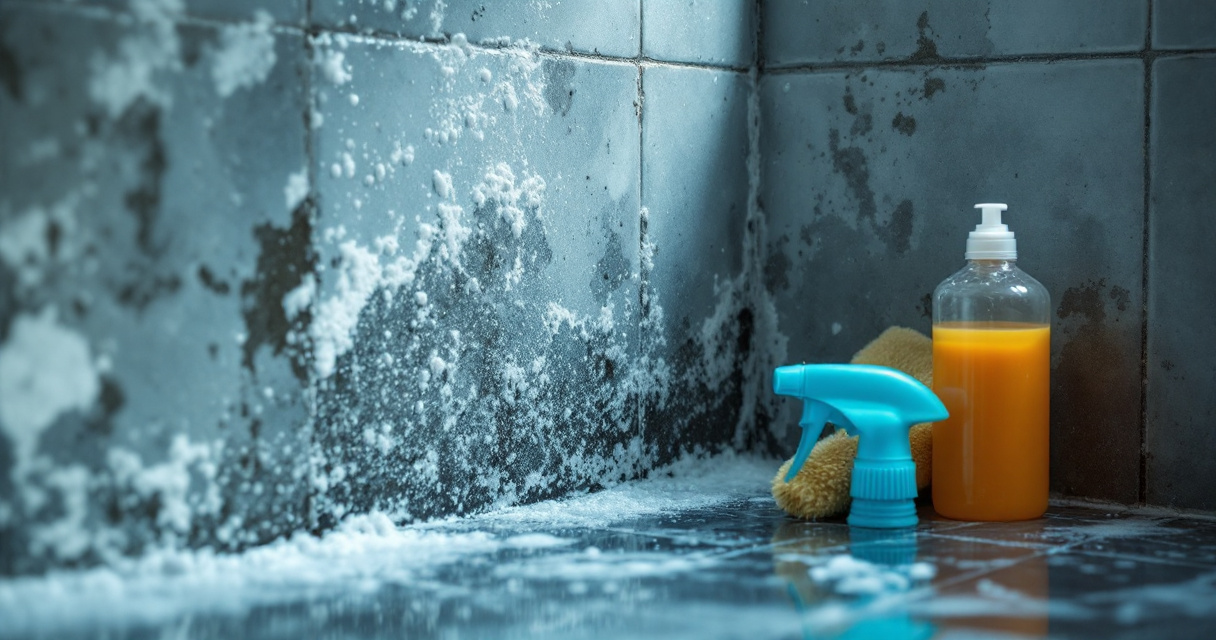
Habits to stop immediately
- Using too much cleaner and not rinsing or wiping it off
- Scrubbing every surface with highly abrasive pads
- Mixing chemicals without label guidance
- Ignoring the base of walls and shower corners
- Leaving wet bath mats or cloths on the floor
- Treating grout as if it is as sealed as tile
- Spraying fragrance products instead of removing soil
One common mistake is chasing "stronger" chemicals when the real issue is poor contact time or poor drying. Another is skipping staff training. If your cleaners don't know which product goes on tile, metal, grout, and sealant, you'll get damage in one area and poor results in another.
That same logic shows up in industrial product use too: performance depends on correct application, not just product strength. You can see that clearly in this guide on how to apply liquid adhesives like a pro.
A useful reminder from a trusted cleaning source
"Clean your shower after every use to remove soap scum and keep mold from growing.", Consumer Reports, How to Prevent Mold From Growing in Your Bathroom
That advice sounds basic, but it holds up because it targets the two things mold needs most: residue and moisture.
When to call in professional help instead of handling it in-house
Sometimes prevention has already been missed, and the issue is no longer a simple cleaning job. If mold keeps returning to the same grout lines or sealant joints after proper washing and drying, there may be trapped moisture, hidden leaks, or old sealant that needs replacement.
Signs the problem is beyond routine cleaning
- Mold returns within days after cleaning
- There is a constant damp smell even when the room looks dry
- Grout is cracking, crumbling, or permanently darkened
- Silicone is peeling away from edges
- Paint around the bathroom is bubbling or flaking
- Water leaks are visible around fixtures or walls
At that point, cleaning should be paired with maintenance work. For commercial sites, document the area, isolate the cause, and review the ventilation and plumbing together.
This is also where supplier consistency matters. Working with a local manufacturer or distributor like Thika Wax Works can help maintenance teams keep the same washroom-cleaning system in place instead of swapping products each month and getting mixed results.
A video guide for tile and grout technique
Video demos are helpful because technique matters. The right brush pressure, dwell time, and wipe-down order can make a bigger difference than people expect.
A practical 2026 prevention plan for homes, hotels, and shared facilities
The best 2026 approach is simple: choose one professional washroom cleaner suited to your tile surfaces, build a repeatable schedule, and measure results by how long the bathroom stays clean and dry, not just how strong the scent is after cleaning.
Prevention plan by property type
| Property type | Best routine | Main risk point | Priority action |
|---|---|---|---|
| Home bathroom | Daily wipe, weekly deep clean | Corners and grout | Improve ventilation |
| Hotel or guest house | Daily housekeeping, weekly tile review | Fast guest turnover | Standardise products and checklists |
| Office washroom | Daily scheduled cleaning | Poor drying after peak use | Midday touch-up and floor drying |
| Hospital or clinic washroom | High-frequency cleaning | Continuous moisture and traffic | Product consistency and supervision |
For businesses, stock control also matters. Running out of the correct cleaner often leads staff to substitute unsuitable products. That's avoidable with a proper procurement routine. If your team already handles multiple supply categories, from housekeeping to industrial inputs, you may also find value in related Thika Wax Works resources like the guide to choosing an industrial adhesives manufacturer in Kenya and this article on food-grade packaging glue suppliers in Kenya.
The main point stays the same: prevention works when your system is consistent.
What to expect next in washroom cleaning
Bathroom mold prevention is becoming more process-driven. More facilities are moving toward colour-coded tools, scheduled inspections, and surface-specific products instead of one-bottle-for-everything cleaning. That shift is practical, not trendy. It reduces mistakes, protects finishes, and helps teams spot moisture issues sooner.
A second useful video if you want a broader shower-cleaning routine is The Best Way to Clean Your Shower and Tub.
Conclusion
Bathroom tile mold prevention is not about the harshest product on the shelf. It comes down to three things: removing soap film with a professional washroom cleaner, drying the space properly, and sticking to a routine that catches trouble spots early. For Kenyan homes, apartments, hotels, hospitals, and offices, that approach is cheaper and easier than repeated mold removal.
If you're reviewing washroom cleaning supplies for your property or business, Thika Wax Works is a practical place to start. Looking for professional cleaning and maintenance solutions in Kenya? Get in touch with the team here: Contact Thika Wax Works.