
A leaking bathroom can ruin ceilings below, and a failed balcony can start cracking, staining, and delamination long before the building looks old. Waterproofing means making a structure resist water ingress under specified conditions, not just making it look sealed, based on the standard definition summarized from Wikipedia. In Kenya, where tiled wet areas, exposed slabs, UV, and heavy rain often combine, picking the right construction chemicals matters more than picking the cheapest one. If you're sourcing materials for a home, apartment block, hotel, or commercial fit-out, Thika Wax Works is one of the local names worth considering for construction chemical solutions and practical support. For a wider primer on concrete protection, their guide to waterproofing compounds for concrete is also a useful companion read.
Why bathrooms and balconies fail first in Kenyan buildings
Bathrooms and balconies are small areas, but they take some of the harshest service conditions in a building. Bathrooms face daily wetting, trapped moisture under tiles, pipe penetrations, and poor floor falls. Balconies deal with ponding water, direct sun, thermal movement, and wind-driven rain.
What makes this worse in Kenya is the mix of construction speed and climate exposure. A balcony in Nairobi may handle strong UV and cold nights, while one in Mombasa also faces salty air and high humidity. In both cases, weak detailing around drains, corners, and thresholds is where leaks usually start.
Key insight: Most waterproofing failures are not caused by one bad product alone. They happen when the substrate, detailing, membrane choice, and tile installation don't work as one system.
Construction chemicals fall under the wider category of specialty chemicals, which Wikipedia describes as products used for specific performance effects across many sectors. In waterproofing, that performance effect is simple: stop water ingress while staying bonded to the surface.
If you manage broader procurement across building or industrial sites, it also helps to work with suppliers who understand adjacent materials. That same supplier knowledge shows up in areas like choosing the best industrial adhesives manufacturer in Kenya, where performance depends on matching product to use case, not buying on price alone.
The leak points that deserve the most attention
The usual weak spots are:
- Floor-to-wall junctions
- Pipe penetrations under sinks and showers
- Balcony door thresholds
- Drain outlets and scuppers
- Cracks in screed or slab
- Movement joints and parapet connections
These areas need reinforcement and careful detailing before the main waterproofing coat goes on.
The best construction chemicals for bathroom and balcony waterproofing
Not every waterproofing product suits every wet area. The top-ranking Kenyan search results heavily feature cementitious, liquid-applied, and bituminous systems, which matches current market practice. For bathrooms and balconies, the first two are usually the most practical.
Quick comparison of common systems
| System | Best use | Main strength | Main limitation |
|---|---|---|---|
| Cementitious waterproofing | Bathrooms, internal wet areas, under tiles | Good bond to concrete and masonry, easy to apply | Less flexible on moving or cracked substrates |
| Polymer-modified cementitious coating | Bathrooms and balconies | Better flexibility than basic cement systems | Still needs good crack and joint detailing |
| Liquid-applied membrane | Balconies, terraces, tricky details | Continuous membrane with fewer joints | Surface prep and correct thickness matter a lot |
| Bituminous waterproofing | Foundations, some external areas | Strong water resistance | Usually less suitable directly under interior finishes in bathrooms |
A cementitious waterproofing system is often the first choice for Kenyan bathrooms because it works well under tiles and on concrete or plastered masonry. A polymer-modified cementitious coating goes a step further by adding flexibility, which helps around corners and mild movement.
For balconies, a liquid-applied membrane can be a smarter pick where there are many details, outlets, and exposed edges. These products form a continuous film, which reduces joint-related weak points when applied correctly.
If you're pairing waterproofing with decorative finishes, you may also want to think ahead about surface appearance and compatibility. That is where related topics like using concrete oxides for coloured floors become relevant in later finishing stages.
How to choose between cementitious and liquid membranes
Use a cementitious system when:
- The area will be tiled
- The substrate is stable concrete or plaster
- You want a simple, site-friendly system
Use a liquid membrane when:
- The balcony has many corners and penetrations
- You need more flexibility
- UV or weather exposure is part of the design requirement
The product data sheet should always confirm if the membrane is suitable for permanent wet areas, exterior use, or direct tile bonding.
What a proper waterproofing build-up looks like on site
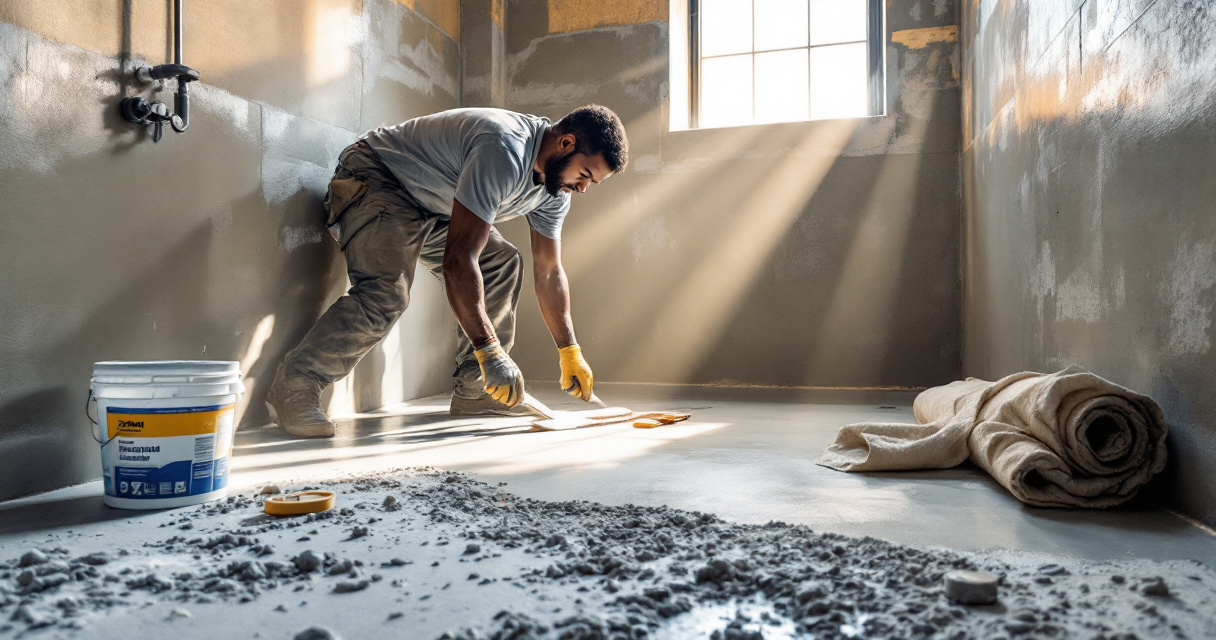
Good waterproofing is a system, not one bucket of chemical. The basic sequence for bathrooms and balconies is fairly consistent, even when the product chemistry changes.
The correct application sequence
- Prepare the substrate, remove dust, laitance, oil, loose plaster, and weak screed.
- Repair cracks, honeycombs, and voids with the right repair mortar.
- Form proper slopes to drains so water doesn't pond.
- Prime the surface if the membrane system requires it.
- Reinforce corners, joints, and penetrations with tape or fabric.
- Apply the first waterproofing coat at the recommended coverage.
- Apply the second coat after the correct waiting time.
- Protect the membrane with screed, adhesive, or tiles as specified.
- Flood test where practical before handover.
Skipping one step can undo the rest. Many leaks blamed on "bad chemical" actually start with dusty surfaces, wet substrates, or membranes applied too thin.
"Quality is never an accident; it is always the result of intelligent effort.", John Ruskin, Quote Investigator reference page
That quote fits waterproofing surprisingly well. The boring steps, cleaning, detailing, curing, and testing, are usually what save the job.
Where bathrooms differ from balconies
Bathrooms need strong detailing around shower zones, WC pipe penetrations, and wall chases. Balconies need more attention on UV exposure, threshold heights, and drainage. A bathroom can hide failure for months under tiles. A balcony often shows failure faster through staining, peeling paint below, or cracked tile grout.
Common specification mistakes that cause expensive callbacks
The biggest mistake is treating all wet areas the same. A guest bathroom on the second floor and an exposed apartment balcony in Kisumu do not face the same risks.
Another common issue is relying only on tile adhesive or grout to stop water. Tiles are a finish, not the main waterproof barrier. Water can pass through grout lines, hairline cracks, and unsealed edges, then sit under the tile bed.
Red flags to catch before work starts
- No slope shown toward the drain
- No detail for floor-to-wall junctions
- No membrane termination detail at doors
- No mention of curing time before tiling
- No flood test in the method statement
- Waterproofing specified after plumbing chases but before repairs are closed properly
You also see problems when contractors mix products from unrelated systems. Primer from one brand, membrane from another, adhesive from a third, then no compatibility check. That may work, but it can also fail quietly.
For teams that handle multiple chemical product categories, this same principle appears in adhesive work too. A good example is how to apply liquid adhesives like a pro, where coverage, surface prep, and curing affect results just as much as product choice.
Why cheap waterproofing often becomes the most expensive option
Low-cost products may look attractive during procurement, especially on price-sensitive projects. But if a bathroom leaks after tiling or a balcony leaks into occupied units below, repair costs jump fast because demolition, reinstatement, and tenant disruption all get added. Paying more for the correct system at the start is usually cheaper than redoing finishes later.
How to evaluate products before you buy in Kenya
Buyers in Kenya usually compare price first, but a better filter is performance documentation. Ask for the technical data sheet, recommended substrate types, coverage rates, drying times, and whether the system is meant for interior wet areas, exterior balconies, or both.
Practical buying checklist for contractors and developers
- Confirm the product type: cementitious, polymer-modified, or liquid membrane
- Check if it is approved for under-tile waterproofing
- Review crack-bridging or flexibility claims in the technical sheet
- Ask about primer, reinforcement tape, and topcoat compatibility
- Confirm cure time before screed, adhesive, or tile fixing
- Check packaging size against your site productivity needs
This is where local support matters. With Thika Wax Works, buyers can work with a Kenya-based supplier that understands construction, industrial chemicals, and site realities. That local context can save time when you need practical answers instead of generic product language.
Key insight: A waterproofing system is only as reliable as the site team's ability to apply it correctly and the supplier's ability to support that process.
If you regularly procure chemicals for different operations, from construction to manufacturing, you may already know the value of supplier guidance from resources like the ultimate guide to hot melt adhesives in Kenya or food-grade packaging glue supplier in Kenya. The same thinking applies here: match the chemistry to the job.
Questions to ask your supplier before approval
Ask these before issuing a purchase order:
- Is this system suitable for submerged, wet, or exposed conditions?
- What surface moisture limits apply?
- Do corners and pipes need reinforcing tape?
- How many coats are required, and at what coverage?
- How long should the area cure before water testing and tiling?
Clear answers reduce site confusion and cut down on rework.
Detailing corners, drains, and movement joints the right way
Most leaks do not happen on the wide open floor area. They start at transitions, where materials change direction or move differently.
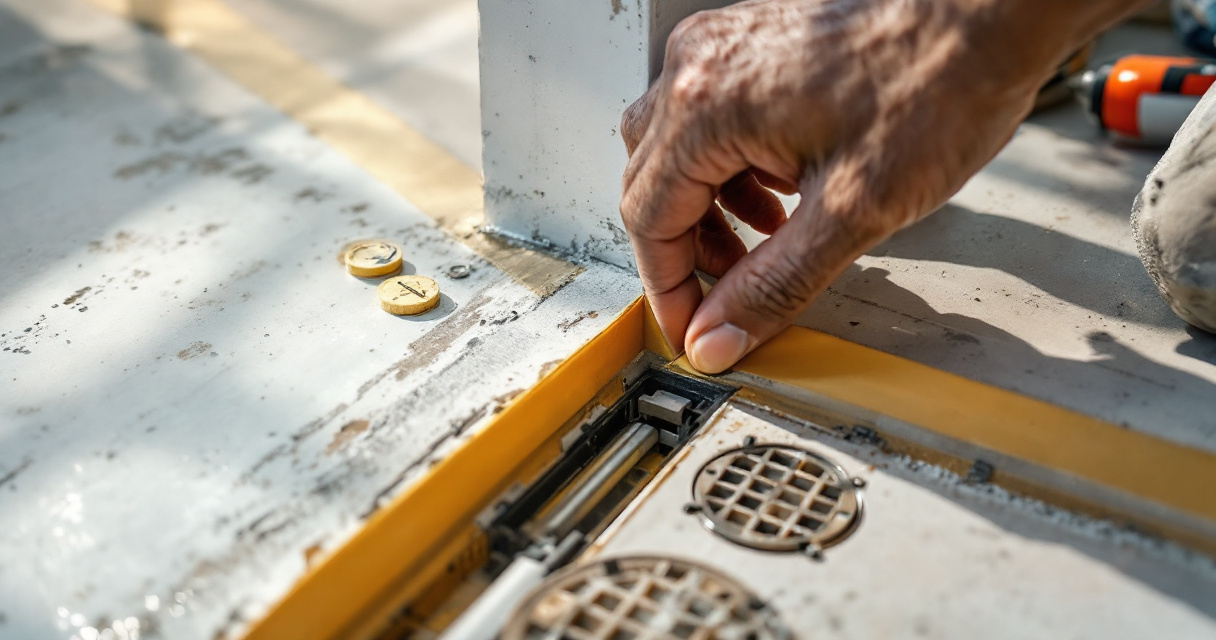
Corners should be clean, sound, and usually reinforced with tape or fabric embedded into the first coat. Pipe penetrations need tight collars or careful sealing so the membrane doesn't thin out around circular edges. Balcony drains need extra care because standing water collects there first.
Movement joints are a separate issue. A rigid waterproof coat stretched across an active joint can crack. Where movement is expected, the joint detail must allow that movement while staying watertight.
Small details that make a big difference
- Create fillets at sharp floor-to-wall junctions where required
- Keep membrane thickness consistent around outlets
- Turn waterproofing up walls to the specified height
- Protect the membrane from damage during later trades
- Do not puncture finished waterproofing with fixings unless the detail allows it
This is one of those areas where site discipline beats guesswork. Busy sites often rush corners, literally, and that is where callbacks begin.
Why flood testing still matters in 2026
A flood test is simple and still valuable. It gives you a chance to catch leaks before finishes lock the problem in place. For bathrooms, it can confirm that corners, penetrations, and the drain detail are holding. For balconies, ponding behavior during a water test also tells you whether the slope is working.
Sealers versus waterproof membranes: don't confuse the two
A sealer and a waterproof membrane are not the same thing. Sealers can reduce absorption, improve stain resistance, or protect the surface finish. A membrane is designed to stop or control water ingress as part of the building envelope or under-tile system.
That confusion is common on balconies, especially where owners want a clear or low-visibility finish. In some cases, a sealer is part of the final protection layer, but it should not replace the actual waterproofing membrane if the design requires one.
Video: sealer differences explained
The video is useful because it shows how different sealers behave in real use. That matters when you're deciding whether you need a decorative protective layer, a waterproofing system, or both.
"An ounce of prevention is worth a pound of cure.", Benjamin Franklin, Founders Online
Franklin was not talking about balconies, but the logic works perfectly for leak prevention.
When a sealer is useful on a balcony
A sealer can help when you want to reduce water absorption on exposed concrete, improve cleanability, or protect the appearance of a finish. But if the slab or tiled balcony already has leakage risk, use the right membrane system first, then specify a compatible sealer only if needed.
What to expect in Kenya through 2027
The direction is clear: buyers want easier application, stronger system compatibility, and better long-term performance under local conditions. In practice, that means more demand for polymer-modified systems, clearer technical support, and waterproofing products that fit tiled wet areas and exposed balconies without too much site complexity.
Kenyan developers and contractors are also paying more attention to lifecycle cost. A cheap membrane that fails under tiles is not really cheap. Expect more project teams in 2027 to ask for complete wet-area systems, not standalone products.
Suppliers that can support multiple related needs, waterproofing, coatings, concrete enhancement, and practical finishing advice, are likely to stand out. That is one reason companies like Thika Wax Works remain relevant to contractors who want one trusted source across construction chemicals.
What smart buyers are doing now
- Standardizing approved systems for bathrooms and balconies
- Requesting technical sheets before purchase
- Training applicators on detailing, not just coating
- Testing mock-up areas before full rollout
- Choosing suppliers with local support and stock reliability
That shift is good for project quality, and honestly, it has been overdue for a while.
A smarter procurement mindset for waterproofing
Think less about the cheapest pail and more about the complete installed cost. Include primers, reinforcement, labor skill, curing time, and failure risk. That gives you a more honest view of value, especially on apartments, hotels, hospitals, and commercial buildings where water damage spreads quickly.
Conclusion
Bathrooms and balconies are two of the easiest places to get waterproofing wrong, and two of the most expensive to repair after finishes are complete. The right approach in Kenya is to choose a system that matches the area, prepare the substrate properly, detail corners and drains carefully, and test before handover. If you need a local supplier that understands construction chemicals and practical site needs, Thika Wax Works is worth a closer look. Looking for waterproofing solutions in Kenya? Explore the range or get in touch here for help choosing the right system for your bathroom or balcony project.